Sculpt People
- 4.4
- Rating
- 100.00M
- Installs
- Free
- Price
 Analysis by App-foxy
I spent time with Sculpt People as a casual 3D simulation game, and my first impression was that it is built around a wonderfully strange idea: instead of controlling a finished character, I shape people myself and then watch the result move. That simple switch makes it feel different from the usual mobile simulation game, where the objective is normally to build, manage, or optimize something.
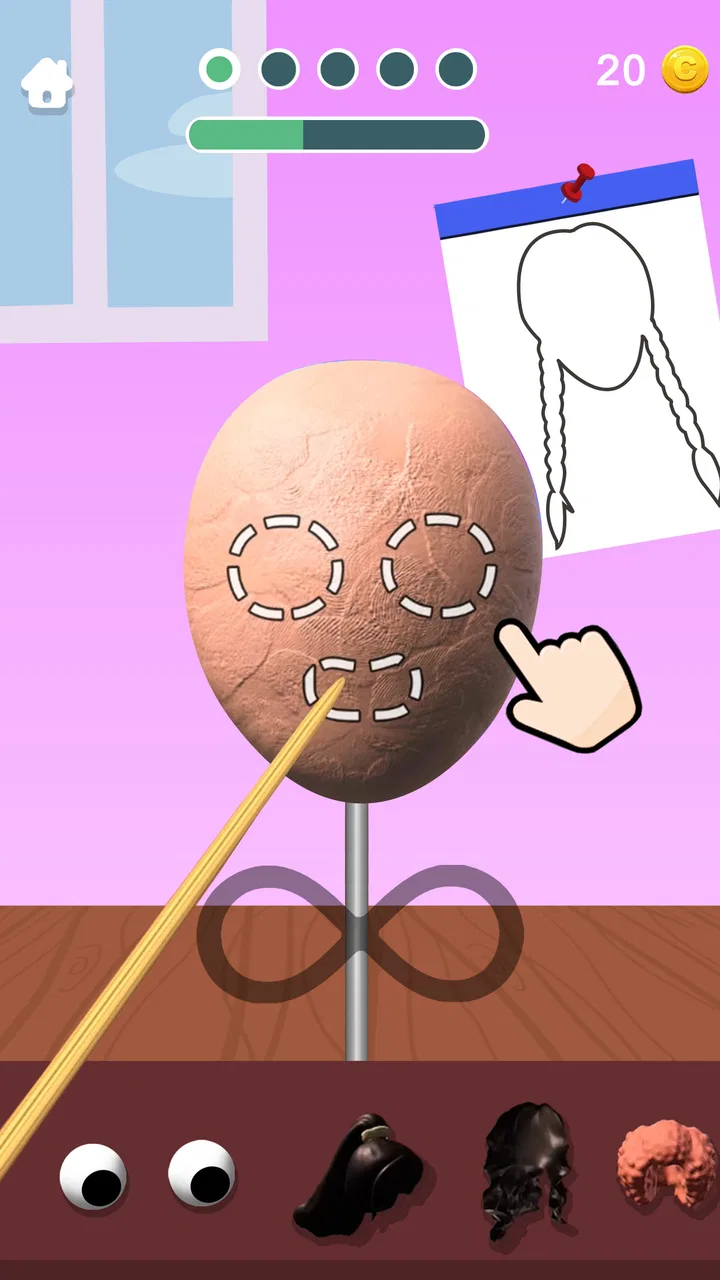
The game comes from CrazyLabs LTD and is free to install. It is aimed at Everyone, so the presentation is light, colorful, and easy to understand. Its appeal is immediate: you do not need to learn a complicated interface before seeing the point. You interact with a clay-like human figure, adjust its appearance, and enjoy the payoff when the character takes part in a slow-motion scene.
That does not mean it will suit every player. I found it most enjoyable in short sessions, especially when I wanted something playful rather than demanding. If you are looking for a deep modeling tool, a detailed life simulator, or a game with long-term strategic progression, this is probably too limited. If you like tactile experiments, funny visual results, and quick challenges that can be understood almost instantly, it has a much better chance of keeping you entertained.
You May Also Like

 Pandora - Music & Podcasts
Pandora’s Music Is Easy to Start, but Harder to Recover
Pandora’s strength is its low-effort path from a seed to a station. Its weak spot is how much confidence it asks you to place in connection, setup, and quiet recovery.

 8 Ball Pool
 Is Built on Rivalries, Rematches, and Routine
A close look at the rivalries, rematches, shared routines, and unanswered safety questions that turn a quick pool match into a persistent mobile community.

 Samsung Music
’s Quiet Strength Is Playing What You Already Own
Its reach comes less from spectacle than from dependable access to a personal library. That simplicity is both the app’s strongest retention engine and its ceiling.

 AccuWeather: Weather Radar
AccuWeather Review: A Quick, Clear Forecast for Everyday Decisions
For everyday plans, the best forecast is the one you can understand quickly. AccuWeather makes rain timing, radar, and local conditions easy to act on, with a few trade-offs.

 Hill Climb Racing
Why Hill Climb Racing Still Turns Crashes Into One More Run
A tiny car, a bumpy hill and one more upgrade: Hill Climb Racing keeps resurfacing because its simple chaos makes every near-miss feel personal.

 AliExpress - Shopping App
AliExpress Makes Global Shopping Feel Personal, but Shoppers Bear the Risk
AliExpress turns a global marketplace into a pocket-sized discovery engine. Its reach is useful, its shopping loop compelling, and its trade-offs easy to miss.
More From Our News Desk
View All News


How the current version feels to play
The current release is version 3.3.3.0, and the basic experience remains focused on sculpting people and seeing those creations used in animated situations. The important thing is the connection between the two parts. The sculpting is not presented as a serious digital-art workflow; it is a playful preparation step. You make a character, then the game gives that character a reason to exist on screen.
I like that the concept does not bury itself under instructions. The visual language tells you what to do, and the exaggerated clay appearance makes small changes easy to notice. A slight adjustment to a face or body can create a noticeably different personality. That gives the game a gentle trial-and-error rhythm: change something, observe the result, and decide whether the new version is funnier or more suitable than the previous one.
The slow-motion movement is a particularly useful part of the presentation. It gives the finished figure a little more drama than a static character preview would provide. Instead of simply admiring a model, I get to see how the shape looks while it is moving. That matters because a design that seems amusing while still can feel completely different once the character is running or posing.
My practical advice is to treat each scene as a visual experiment rather than trying to create a perfect person. The game is more rewarding when you deliberately exaggerate features and accept unexpected results. A symmetrical, ordinary-looking character may be pleasant, but an unusual face or body shape often creates the more memorable moment.
There is also a useful distinction between playing for completion and playing for amusement. Someone focused on finishing every available task may find the repeated structure familiar fairly quickly. Someone who enjoys making odd variations can extend the experience by setting personal challenges, such as creating a character with a particular expression or trying to make two very different figures for the same type of scene.
The sculpting loop rewards quick visual decisions
The strongest part of the game is the short feedback loop. I never felt that I needed to plan for a long time before testing an idea. That makes it suitable for a spare moment while waiting for transport, taking a break, or relaxing before bed. A typical session can begin with one small change and turn into several attempts because the next result is always easy to check.
That convenience comes with a trade-off. The game encourages immediate visual reactions, not careful construction. If you want precise control over every surface, proportion, or facial detail, you may find the tools too simplified. The clay theme is charming precisely because it turns accuracy into something less important, but that same design limits how much control an experienced modeler will have.
I also found that the best workflow is to make broad changes first and save fine adjustments for the end. Starting with tiny details can make the process feel slower without improving the final scene. Once the general shape looks right, a few facial changes can provide the personality that makes the result work.
Where it fits among simulation games
Compared with management simulations, this game asks for almost no planning. There is no need to balance a city, organize a business, or maintain a large virtual world. Compared with character-creation tools, it is less concerned with realistic customization and more interested in the joke or surprise created by the finished figure. Compared with physics-based toy games, it places more emphasis on the person you create before the movement begins.
That position is both its identity and its limitation. I would choose it over a conventional simulation when I want a quick creative distraction. I would choose a deeper modeling or life-simulation game when I want progression, detailed control, or a world that continues to develop around my decisions. The right choice depends less on whether one game is “better” and more on whether I want a short visual gag or a longer system to manage.
The large audience suggests that this uncomplicated format has broad appeal. The game has passed 100 million installs and holds an average rating of 4.4 from roughly 533 thousand ratings. Those figures fit my experience: it is easy to understand, visually distinctive, and accessible even if you do not normally play simulation games.
What the release history means for players
The game was released on October 19, 2020, and the current version shows that it has continued to receive attention rather than remaining frozen at its original launch state. I would not interpret a newer version number as proof that every possible weakness has been solved, but it does make the game feel like an active product rather than a forgotten experiment.
For someone installing it today, the practical benefit is straightforward: the current build is the one to judge, not an early version remembered from years ago. Existing players who return after a long break should still expect the same central identity. The appeal remains the combination of sculpting, visual comedy, and movement, so an update should not be expected to transform it into a completely different genre.
The minimum requirement is Android 7.0, which makes it approachable for people using older compatible devices. That is helpful for a casual title because the audience is not forced toward a recent phone simply to try a lightweight creative game. Even so, the smoothness of any 3D application can vary between devices, and I would keep expectations realistic if your phone is old or already struggles with animated games.
One thing I appreciate about the version information is that it gives returning players a clear reference point. If you last played a much earlier build, checking that the installed release is 3.3.3.0 is a sensible first step before deciding whether the game has changed enough for you. The number itself does not tell me which individual improvements were made, so I judge the release by how comfortably the core loop plays now rather than by assuming every update introduced a major new system.
What existing players may notice
Returning users are likely to recognize the same fast, visual structure. That is good news if the original appeal worked for you, because the game does not appear to have abandoned its central experiment. It is less good news if you stopped playing because you wanted a much deeper progression system or more serious creative control. A refreshed version cannot automatically solve a mismatch between the game’s design and your preferred style.
My suggestion for former players is to approach it without trying to recover a long-term hobby. Open it when you want to make and inspect a few characters. The experience is more convincing when judged as a compact toy-like simulation than when measured against large games with extensive campaigns or complex customization.
New users should also know that the free price makes trying it easy, but optional purchases are part of the experience. Individual in-app items range from $1.99 to $4.99. I would begin without spending anything and first decide whether the basic sculpting loop itself is satisfying. If the main interaction does not hold your attention, buying extras will not change the underlying style of play.
That approach is especially important for younger players. The age rating is Everyone, but a free game with optional purchases is still worth using with sensible device-store controls. The rating describes the content, not whether every player needs access to every purchase option. For families, I would treat the game as suitable for its light presentation while keeping spending decisions deliberate.
Small techniques that improve the experience
My first concrete tip is to compare characters side by side in your imagination instead of judging each one in isolation. Make one restrained figure, then make a deliberately exaggerated version. The contrast helps reveal which changes actually affect the scene and which ones are barely visible once the character moves.
Second, use the movement sequence as a test, not merely as a reward. A face that looks expressive in the sculpting view may lose its impact during motion. I found it more useful to let the animation guide the next edit: if the character looks too plain while moving, exaggerate one feature rather than changing everything at once.
Third, create a personal theme for a short session. For example, I might try to make a group of characters that all look related, or I might intentionally produce the most awkward-looking figure I can. This adds structure without pretending the game is a full creative suite. It also reduces the feeling of repeating the same action without a goal.
A fourth tip is to avoid spending immediately on the basis of one appealing option. Because the game is built around quick visual novelty, a purchase can feel exciting for a moment and then become ordinary once the surprise fades. I would only consider an item worthwhile if it changes the kind of experiments I want to perform repeatedly, not simply because it looks different in a single scene.
Where the game still falls short
The biggest limitation is depth. The central idea is clear and entertaining, but it is also narrow. Once you understand how to sculpt a person and watch the result move, the novelty depends heavily on your willingness to invent your own challenges. Players who need a strong sense of advancement may feel that the game runs out of meaningful decisions earlier than a traditional simulation.
The controls are another potential dividing line. Simplification helps beginners, but it can frustrate anyone who wants exact shaping. There is a difference between being able to make a funny character and being able to make precisely the character you imagined. This game is much closer to the first experience.
I would also avoid describing it as a replacement for professional 3D modeling software. The clay presentation is a creative theme, not a promise of production-ready modeling. If your goal is to export detailed assets, learn industry workflows, or build a controlled character for another project, you need a tool designed for those tasks instead.
The same applies to players searching for a conventional running game. The movement is part of the payoff, but the sculpting decision is the heart of the experience. If you want direct control over speed, timing, or a long sequence of levels, a dedicated action game will probably be more satisfying.
There is also a mild repetition problem. The first few creations can feel fresh because the visual results are surprising. Later, the loop depends on whether you personally enjoy refining shapes and comparing outcomes. I think the game works best in bursts, with time away between sessions. Playing it continuously for a long stretch may make its limited structure more obvious.
Who should try it and what to watch next
I recommend it to casual players who enjoy making things without needing a serious creative objective. It is a good fit for someone who likes humorous character design, quick experiments, and animated results. It can also work well as a family-friendly game to explore together, provided purchases are handled carefully and everyone understands that the fun comes from playful variation rather than a large story.
I would skip it if you want an involved simulation with resource management, a detailed avatar creator, or a substantial progression path. I would also skip it if you dislike repeating short interactions or if you expect every sculpting adjustment to be exact. In those cases, a deeper simulation or a dedicated modeling application would better match your expectations.
What I would watch in future releases is not simply a higher version number, but whether updates add meaningful reasons to return. New ways to use created figures, more expressive outcomes, or stronger support for experimenting would extend the game naturally. Improvements that only refresh presentation would be welcome, but they would not address the main question for long-term players: what new creative decisions can I make?
For now, the current release succeeds because it knows what it is. CrazyLabs LTD has made a free simulation game that turns character creation into a quick visual joke, and that focus gives it more personality than many generic mobile titles. The rating of 4.4 and its broad install base are understandable, but I would still judge it personally: try the free version, spend time testing exaggerated designs, and see whether the movement payoff makes you want to create another person.
My final view is positive but measured. This is best enjoyed as a playful sculpting toy with animated consequences, not as a complete simulation world. When I use it in that spirit, it is easy to pick up, amusing in short sessions, and distinctive enough to recommend to a friend who wants something unusual. Its limits become clear when I ask it to provide depth it was never designed to offer, so the smartest way to enjoy it is to embrace the quick experiments and keep expectations focused on its wonderfully odd central idea.
FAQs for Sculpt People
01What is the main objective of Sculpt People?
Sculpt People is a creative simulation game where players use various tools to sculpt lifelike 3D models of different characters. The primary objective is to mold, paint, and decorate these models as accurately as possible to match given references, earning points and rewards for precision and creativity.
02Is Sculpt People suitable for all ages?
Sculpt People is generally suitable for players of all ages, though it’s particularly engaging for those with an interest in art and design. The game features simple controls and a user-friendly interface, making it accessible for both younger players and adults seeking a relaxing, creative experience.
03Does Sculpt People require an internet connection to play?
Sculpt People can be played offline, allowing players to enjoy the game without an internet connection. However, certain features like updates, in-app purchases, and competitive leaderboards may require a stable internet connection to access fully.
04Are there in-app purchases in Sculpt People?
Yes, Sculpt People offers in-app purchases. Players can buy additional tools, materials, and decorations to enhance their sculpting experience. While the game is free to download, these optional purchases can provide a richer gameplay experience and help players progress faster.
05How does Sculpt People handle user data and privacy?
Sculpt People respects user privacy and typically requires minimal data collection. The app may collect usage data to improve user experience and game performance, but it adheres to strict privacy policies. It's advised to review the app’s privacy policy for detailed information on data handling.
Pros
- Engaging and creative gameplay.
- Intuitive controls and interface.
- Variety of tools for sculpting.
- Regular updates with new content.
- Supports offline play.
Cons
- Ads can be intrusive at times.
- Limited customization options.
- Some tools require in-app purchases.
- Occasional lag on older devices.
- No multiplayer or social features.

Sculpt People
Gallery